

Hyperhidrosis (excessive sweating)
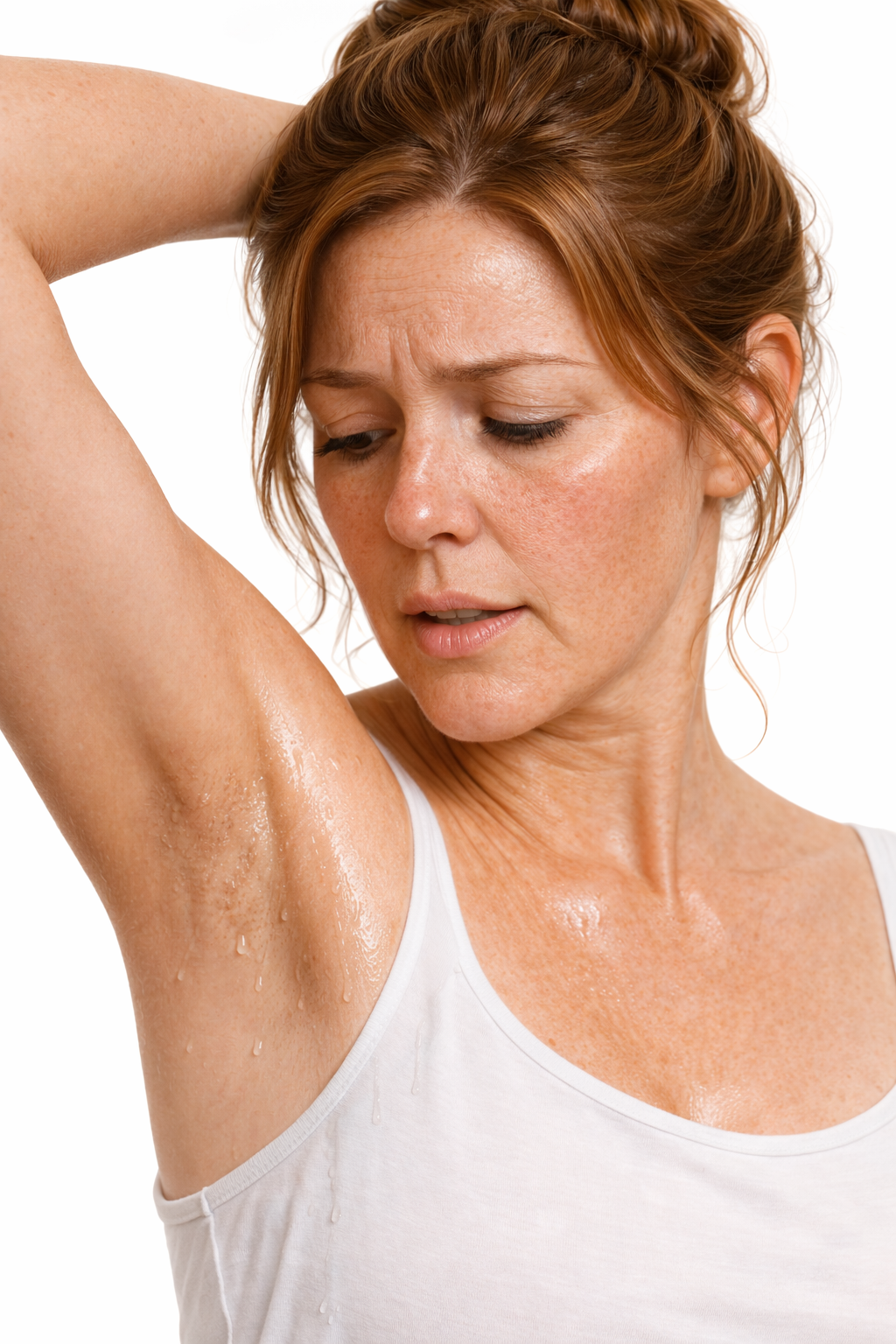
Excessive sweating is one of those concerns people suffer with quietly for years before they realise it's something that can actually be managed. They change their clothes twice a day, avoid certain fabrics, plan their outfits around it, turn down situations where they might be visibly affected. It becomes a background tax on daily life that most people just absorb as normal.
It's not something you just have to live with.
Hyperhidrosis — excessive sweating beyond what your body needs for temperature regulation — is a recognised medical condition. It can affect the underarms, hands, feet, face, or other areas, and it ranges from mildly inconvenient to genuinely life-limiting depending on severity. The emotional and social impact is rarely talked about and almost always underestimated by anyone who hasn't experienced it.
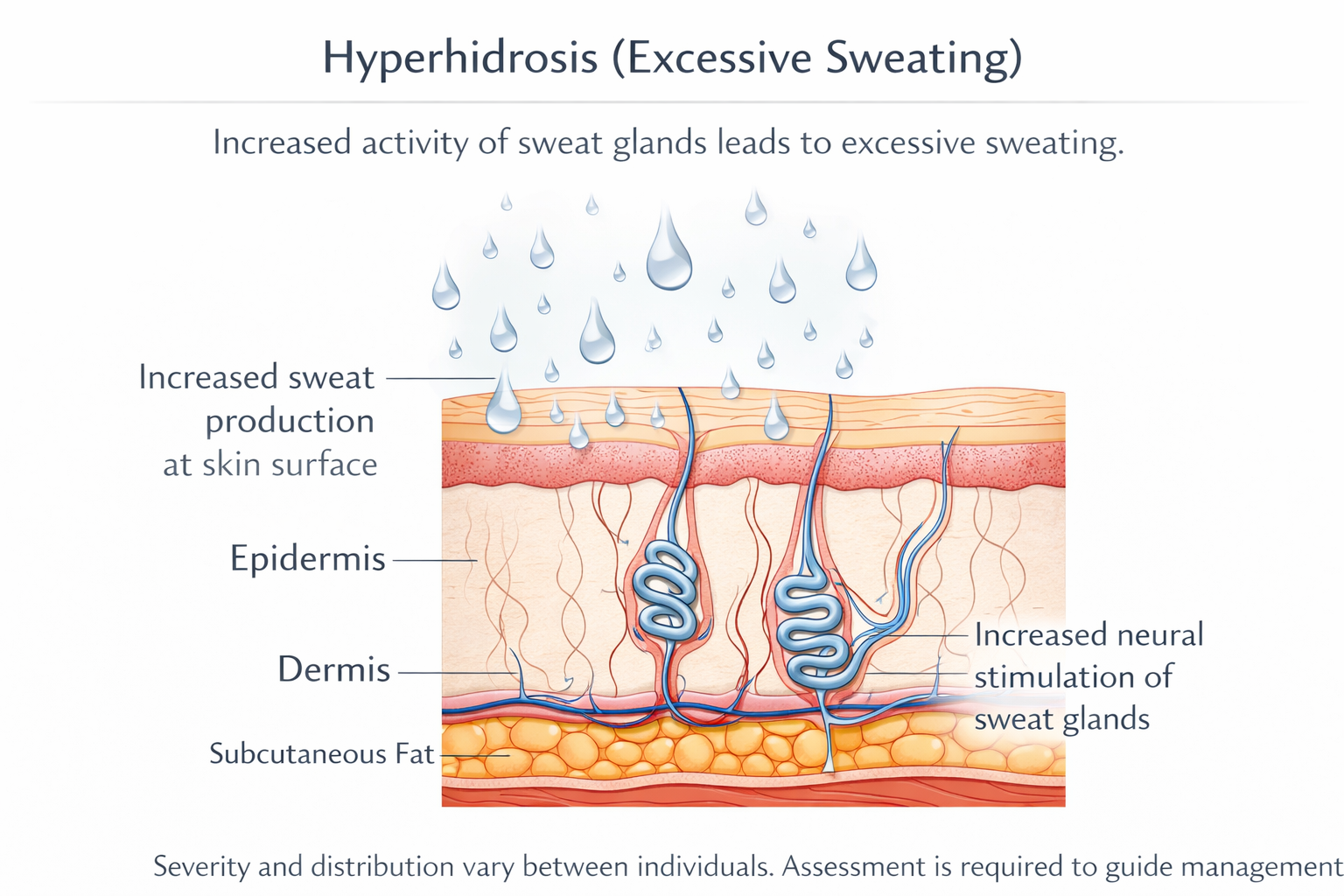
Before any management is recommended, assessment looks at the areas affected, severity and pattern, onset and triggers, and medical history — because hyperhidrosis can be primary, meaning it occurs without an underlying cause, or secondary, meaning it's driven by a medication, a hormonal condition, or another medical factor. The distinction matters because it changes the management approach entirely.
If a medical cause is suspected, that's addressed first. Managing the symptom without identifying the driver is not a plan — it's a delay.
Management is tailored to the individual, the areas involved, and the clinical picture. It may include topical approaches, medical management where appropriate, and procedural options in selected cases. Not every patient requires a procedural approach — and you'll know exactly what's recommended and why before anything proceeds.
Results develop over time. Some approaches require repeat treatment to maintain. What to expect is discussed clearly during your consultation so there are no surprises.