
Skin ageing & Structural changes
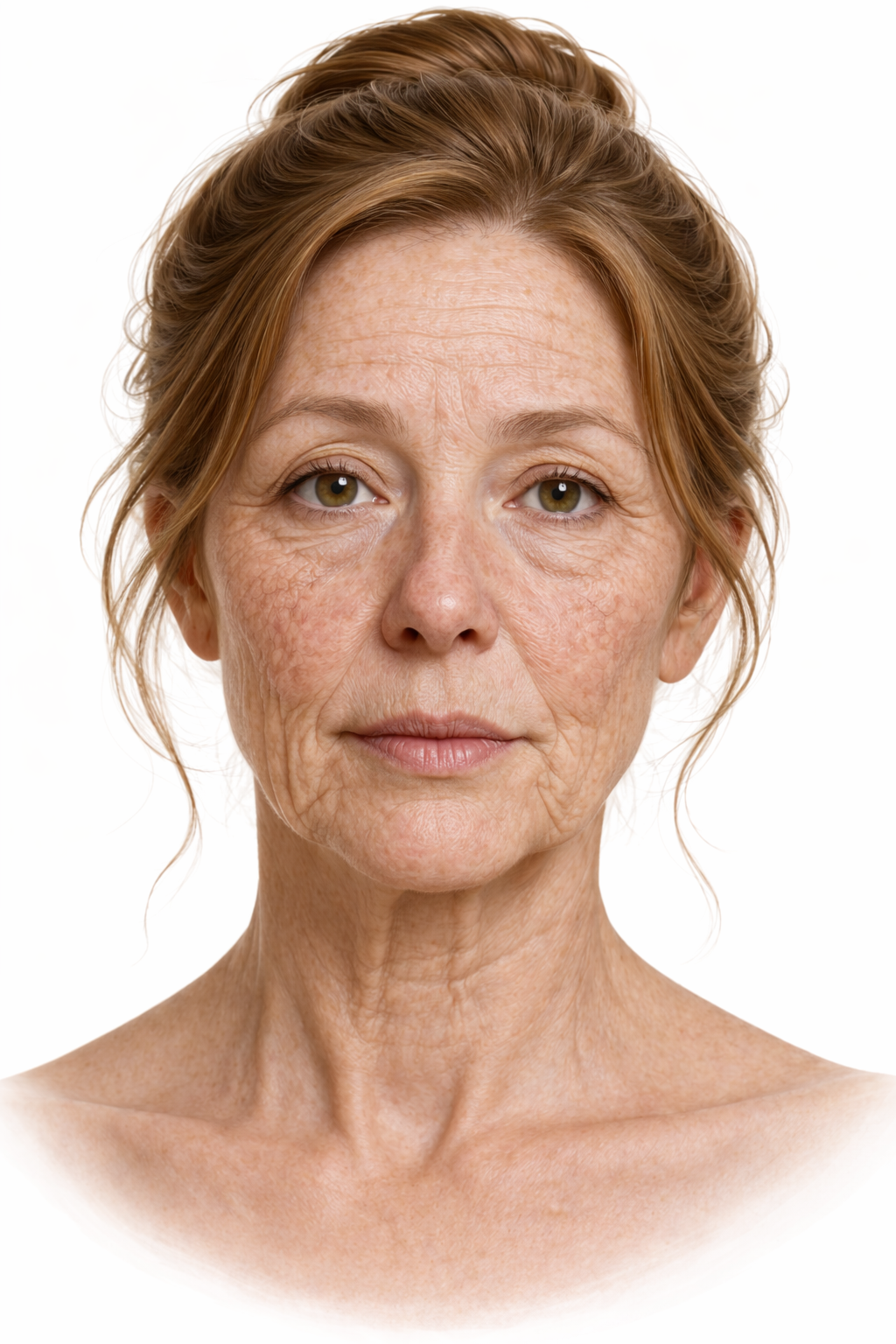
Skin ageing is not a problem to be solved. It’s a process to be managed — thoughtfully, with realistic expectations, and with a plan that makes sense for your face specifically rather than for faces in general.
The most common mistake in aesthetic medicine is treating isolated features rather than understanding what’s driving them. Fine lines around the eyes may be about skin quality, muscle activity, volume loss, or all three — and treating one without considering the others produces results that look incomplete or unnatural.
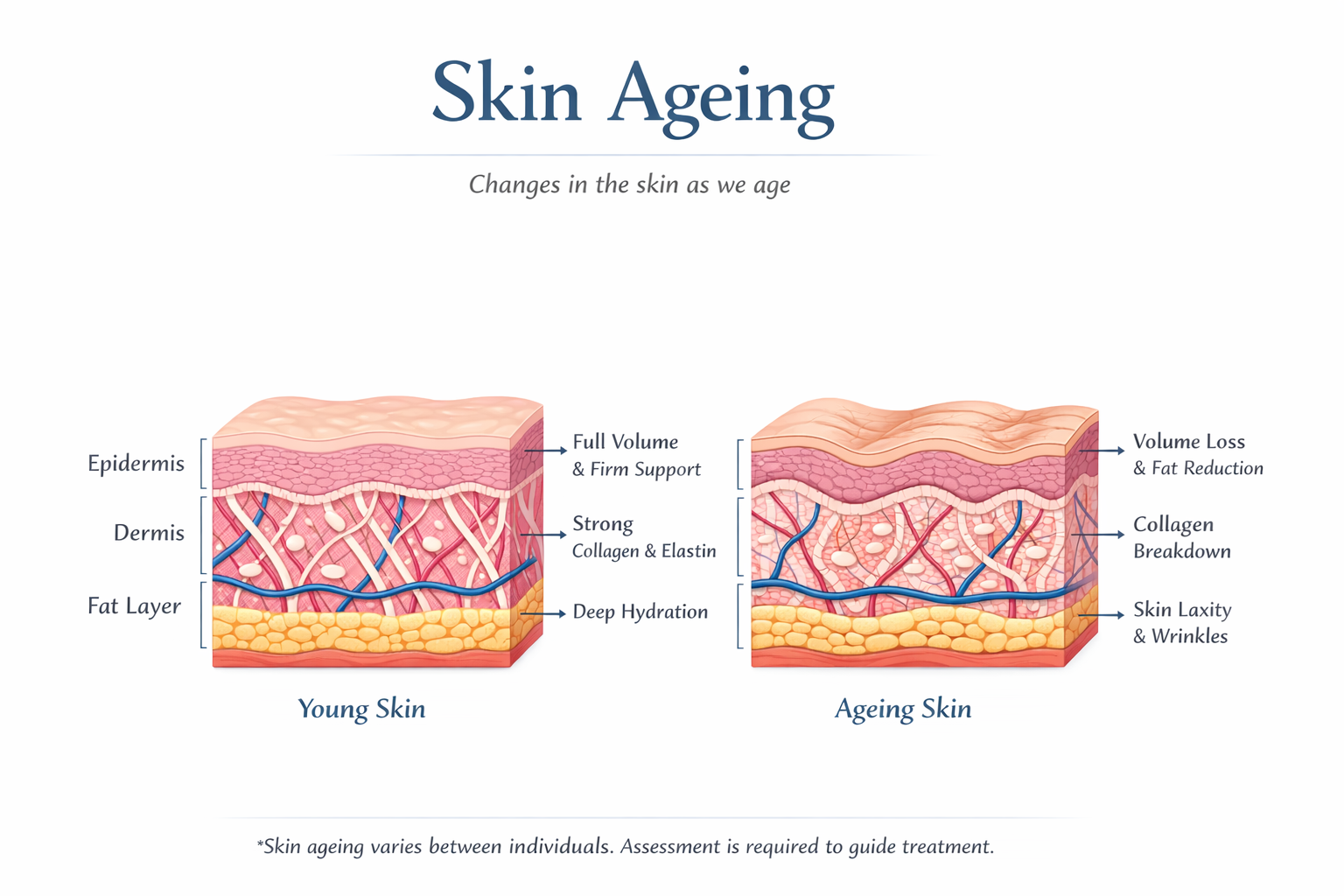
Assessment here looks at skin quality, structural changes, volume shifts, contributing lifestyle and environmental factors, and what the patient actually wants — not just what they’ve come in asking to fix. Those are often different things, and the conversation about the difference is part of the consultation.
Management may include preventative strategies, skincare optimisation, regenerative approaches, collagen stimulation, structural treatments where appropriate, and muscle-relaxing options in selected cases.