

Redness & Rosacea

Rosacea is chronic. That’s the first thing most patients aren’t told — and it’s the most important thing to understand before starting any management plan.
It can be controlled. Flares can be reduced. Redness can be significantly improved. But rosacea doesn’t go away permanently, and any approach that doesn’t account for that from the beginning is setting you up for disappointment.
What makes rosacea manageable is understanding your specific subtype and your specific triggers. Vascular rosacea responds to different management than inflammatory rosacea. A skin barrier that’s been stripped by years of the wrong products needs to be rebuilt before procedural treatments will hold. Triggers — heat, alcohol, certain foods, stress, UV — vary between patients and identifying yours is part of the work.
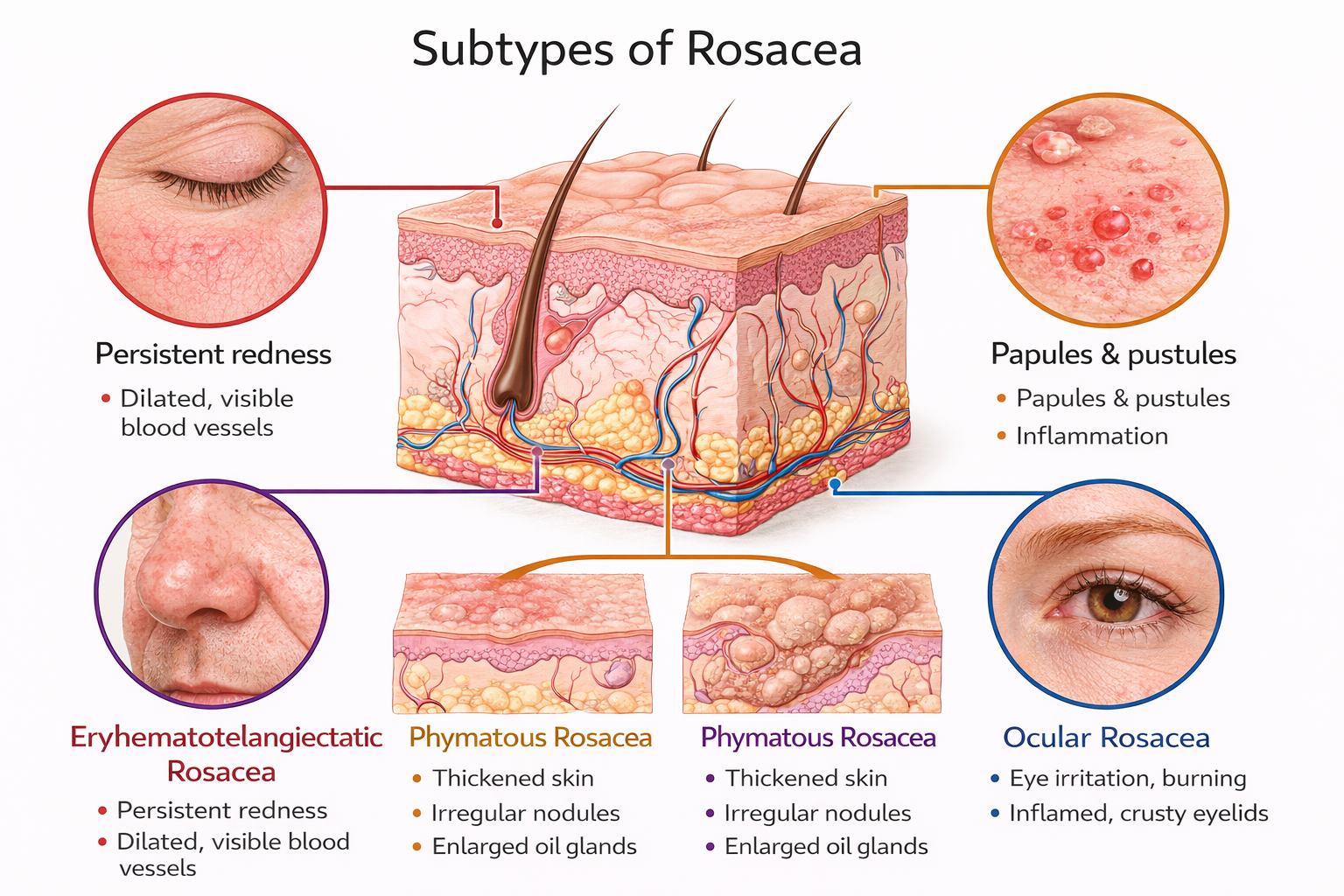
Assessment here looks at rosacea subtype, trigger patterns, severity, and skin history.
Management may include trigger identification and avoidance strategies, skincare optimisation, medical treatment where appropriate, and procedural options in selected cases.
This is a long-term relationship with your skin, not a single treatment fix. That’s not a warning — it’s just how rosacea works, and managing it well starts with understanding that.