
ENERGY-BASED TREATMENTS
Light and laser — selected because they're right, not because they're popular.
Energy-based treatments are some of the most effective tools available in aesthetic medicine.
They're also some of the most misapplied. IPL for pigmentation that's hormonal. Laser on skin that hasn't been properly assessed. Treatments chosen off a menu rather than from a clinical picture.
At this clinic, no energy-based treatment is recommended without assessment first. The technology is only as good as the thinking behind it.
The platform used here
This clinic uses the Etherea-MX® — a medical-grade laser and light system that houses multiple technologies within a single platform. This allows treatment to be tailored precisely to your skin type, concern, and goals — and adjusted over time as your skin responds.
How these technologies work in the skin
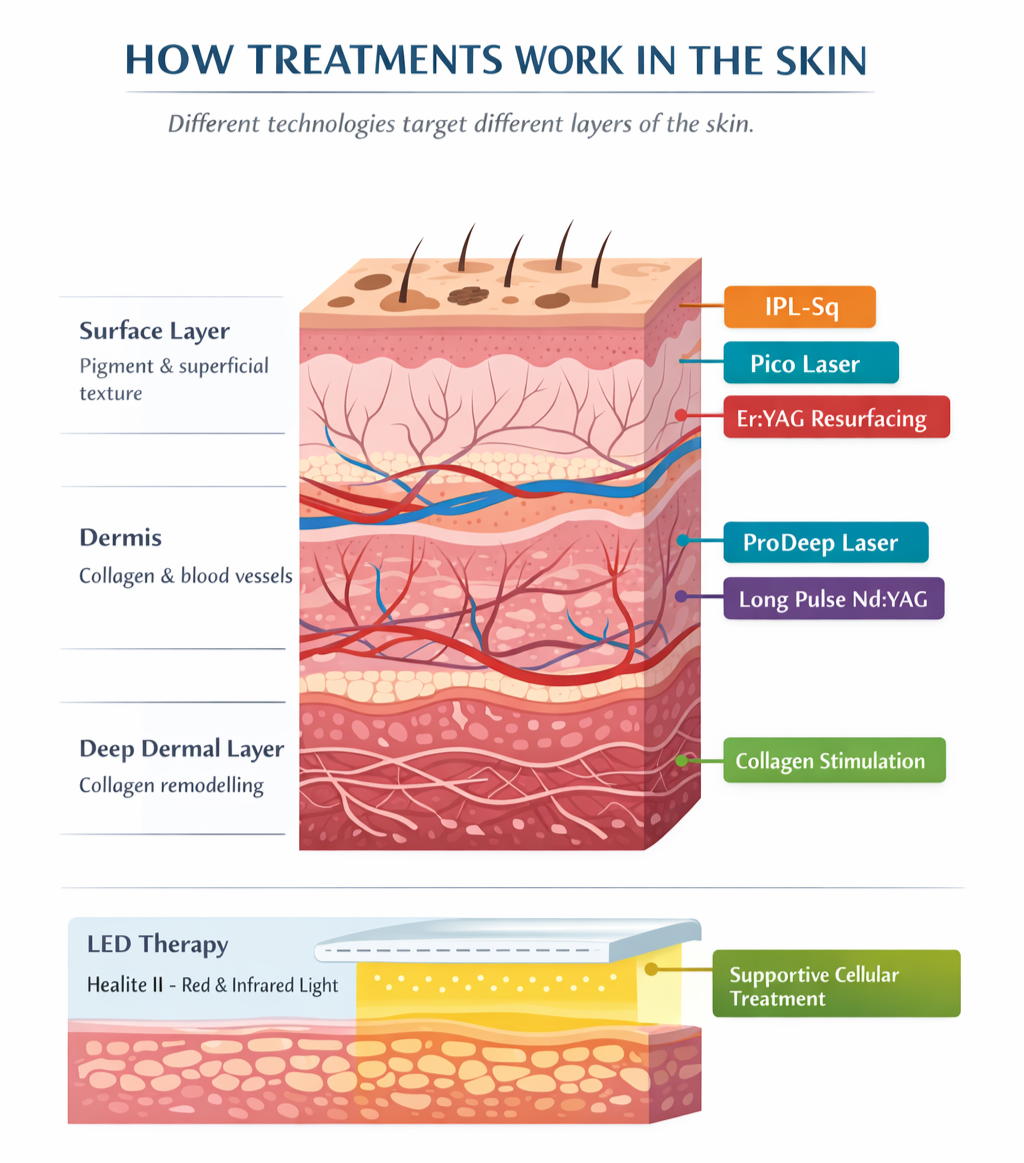
Different technologies interact with different layers of the skin, which is why selection matters.
At the surface, technologies including IPL, Pico laser, and the surface component of Er:YAG resurfacing target pigment, uneven tone, sun damage, and superficial texture changes — the concerns that live in the outermost skin layer.
Deeper in the dermis, technologies including Long Pulse Nd:YAG and ProDeep fractional laser interact with collagen, elastin, and blood vessels — addressing redness, vascular concerns, skin firmness, and texture at a structural level.
For deeper structural concerns — acne scarring, stretch marks, significant skin laxity — some treatments deliver energy beneath the dermis to support collagen remodelling where surface treatments alone can't reach.

The technologies available
IPL (IPL-Sq)
Used to target pigmentation, sun damage, redness, visible vessels, and in selected cases, hair reduction. Minimal downtime; temporary redness; pigment may darken briefly before fading.
Long Pulse Nd:YAG
Used for visible blood vessels, redness, and to support skin rejuvenation. Redness or mild swelling for 24–48 hours.
DualMode Er:YAG Resurfacing
Resurfaces the skin and stimulates renewal. Used for scar management, deeper texture concerns, and rejuvenation. Several days of redness and peeling depending on intensity.
Pico Laser
Very short pulse technology targeting pigmented lesions, tattoo pigment, and overall skin quality. Minimal downtime; temporary redness.
ProDeep Fractional Laser
Delivers energy beneath the surface to support collagen activity and structural improvement. Used for acne scarring, stretch marks, and texture. Mild redness for 1–2 days.
Healite II LED
Low-level light therapy using specific red and near-infrared wavelengths to support cellular activity. Unlike laser, LED does not damage or remove skin tissue. Used as a supportive treatment alongside other procedures — for post-procedure recovery, inflammatory conditions, acne management, and wound healing. No downtime.
Why more than one treatment is sometimes recommended
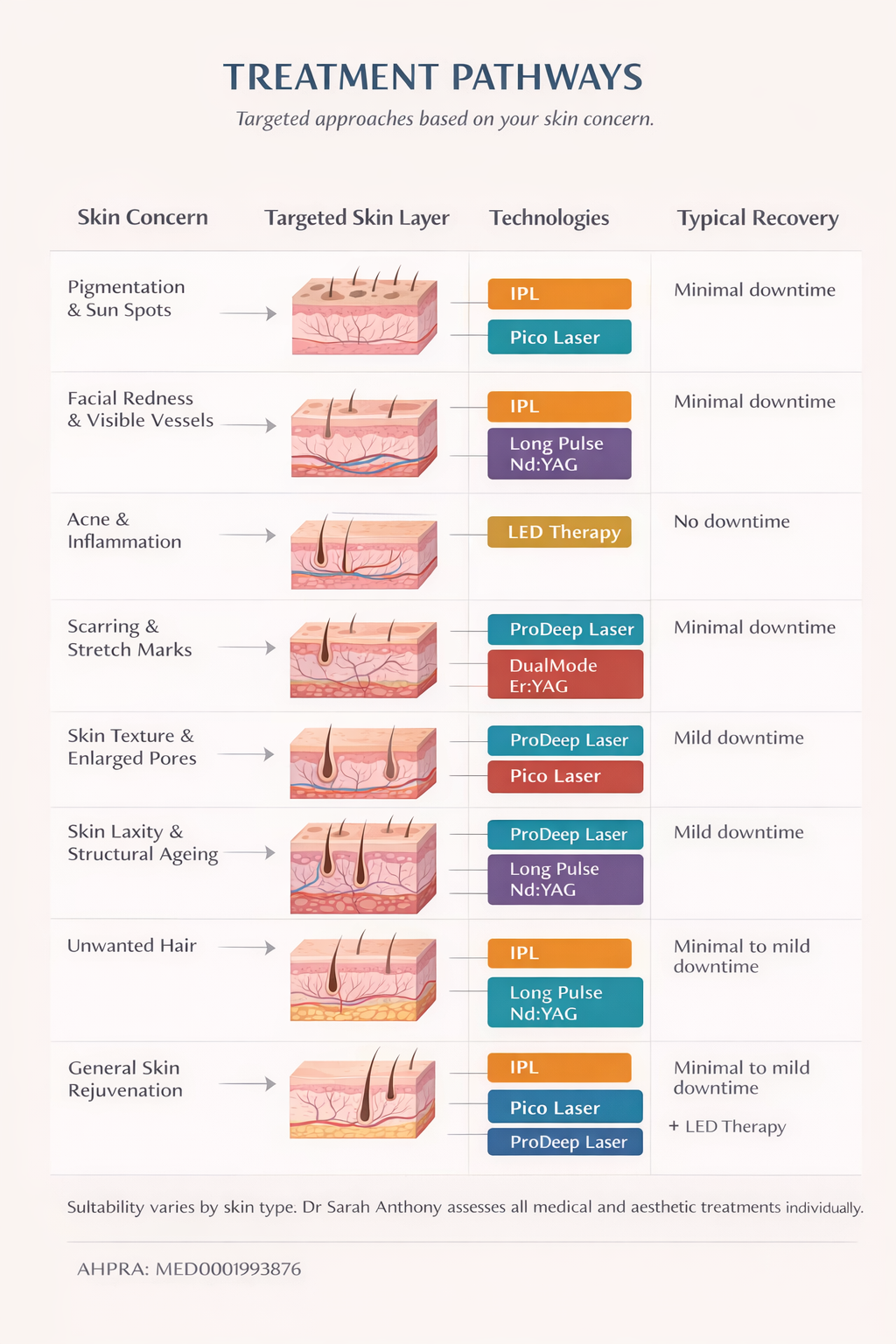
Many skin concerns involve several different structures. What patients describe as "skin ageing" may involve pigmentation, redness, collagen loss, texture changes, and volume shifts — at different depths, requiring different tools. A single treatment often cannot address every component. Treatments may be layered or staged over time, and are commonly combined with medical-grade skincare and sun protection as part of a broader plan.

Important Information
Treatment recommendations are made following medical consultation and clinical assessment. Not all treatments are suitable for every skin type. Multiple sessions may be required. A consultation with Dr Sarah Anthony (MBBS, FRACGP) is required to determine suitability, discuss expected outcomes, and review possible risks.